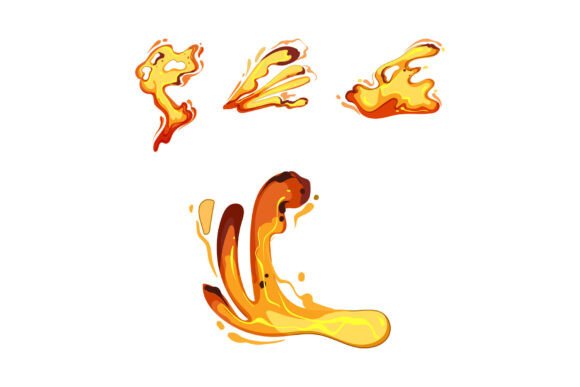
Mastering Molten Lava Splash Liquid Fluid Animation for Dynamic Visual Effects
In the ever-evolving landscape of digital design and interactive media, few visual elements command attention quite like fire and molten rock. The Molten Lava Splash Liquid Fluid Animation represents a specialized niche within visual effects (VFX) that combines the chaotic physics of liquids with the intense luminosity of thermal energy. Whether you are an indie game developer seeking to enhance combat feedback, a motion graphics artist creating abstract backgrounds, or an educator explaining geological phenomena, understanding the mechanics and aesthetics of flowing lava is essential. This dynamic collection of fiery liquid splashes and bursts, characterized by vivid yellow, orange, and red colors, serves as more than just decoration; it is a fundamental language of intensity, danger, and transformation in modern digital content.
The Anatomy of Fiery Liquid Dynamics
To truly leverage molten lava animations, one must first understand what distinguishes them from standard water or oil simulations. Lava is a non-Newtonian fluid with high viscosity and extreme temperature, meaning it behaves differently under stress and emits its own light. When animating or utilizing pre-made assets for flowing lava or fiery liquid splashes, three core physical properties dictate the realism and impact of the effect.
Viscosity and Weight
Unlike water, which splashes with high velocity and fine droplets, molten lava moves with deliberate heaviness. A realistic lava splash does not spray; it globs, stretches, and tears. The animation must convey mass. When a burst occurs, the secondary droplets should follow parabolic arcs heavily influenced by gravity, often cooling and solidifying before they even hit the ground. In game design, this weight provides crucial tactile feedback to the player, signaling that the hazard is substantial and slow-moving but devastating upon contact.
Thermal Radiation and Color Grading
The signature look of these animations relies on the interplay of vivid yellow, orange, and red colors. However, achieving a professional look requires understanding blackbody radiation. Real molten rock is not merely painted red; it glows because it is hot. The hottest parts of the fluid appear white or bright yellow, transitioning to orange and deep red as the surface cools. In digital compositing, this is achieved through emissive shaders and bloom effects. Without proper lighting integration, a lava splash looks like flat red paint rather than a volumetric heat source. The glow must interact with the environment, casting dynamic light on nearby geometry and particles.
Turbulence and Surface Tension
Lava possesses immense surface tension. As it splashes, the fluid tends to hold together in thick strands rather than atomizing into mist. This creates unique silhouettes during bursts. For abstract concepts, artists often exaggerate this turbulence to create hypnotic, rhythmic patterns. The chaos of the fluid dynamics becomes a canvas for artistic expression, where the unpredictable nature of the simulation mirrors themes of creativity, destruction, or rebirth.
Practical Applications in Game Design and Interactive Media
The primary audience for high-quality molten lava assets is the video game industry. Here, these effects serve functional roles beyond mere aesthetics. Understanding how to implement dynamic collections of flowing lava can significantly elevate user experience and gameplay clarity.
- Environmental Storytelling: Lava flows define biomes. They tell the player they have entered a volcanic region, a dungeon, or an alien planet. The color temperature sets the mood; brighter yellows suggest active, immediate danger, while darker reds imply dormant, ancient heat.
- Combat Feedback and Hit Confirmation: When a player casts a fire spell or triggers an explosion, a lava splash particle effect provides instant visual confirmation. The vivid colors cut through visual noise, ensuring the player knows their action was successful.
- Hazard Delineation: In platformers and action games, lava is the universal symbol for "instant death." High-contrast fluid animations ensure players can clearly distinguish safe ground from hazardous zones, reducing frustration and improving accessibility.
- UI and Menu Transitions: Abstract lava bursts are increasingly used in user interfaces. A menu background featuring slow-motion, viscous fluid creates a premium, energetic feel without distracting from navigation elements.
Beyond Gaming: Education, Business, and Abstract Art
While gaming dominates the conversation, the utility of molten lava fluid animation extends into diverse sectors. Recognizing these broader applications helps creators maximize the value of their asset libraries.
Educational Visualization
In geology and earth science education, accurate simulations of pyroclastic flows and lava tubes are invaluable. Textbooks cannot convey the terrifying speed of a lava surge or the way viscosity changes with silica content. Interactive 3D animations allow students to manipulate variables and observe outcomes safely. Here, accuracy trumps stylization; the vivid colors must correspond to accurate temperature ranges to be educationally valid.
Marketing and Brand Identity
Brands associated with energy, performance, or spice often utilize fiery liquid motifs. Think of hot sauce commercials, automotive engine promotions, or tech companies launching "blazing fast" processors. The molten lava splash serves as a metaphor for potency and unstoppable force. In these contexts, the animation is often cleaner and more controlled than in games, designed to loop seamlessly behind text overlays or product renders.
Abstract Motion Graphics
For music videos, concert visuals, and digital art installations, lava offers a perfect blend of organic randomness and structural coherence. Artists use fluid simulations to create generative art where no two frames are identical. The emotional resonance of fire—passion, anger, warmth—translates directly to the viewer, making it a powerful tool for non-narrative storytelling.
Common Misunderstandings and Technical Pitfalls
Despite the popularity of these effects, beginners often fall into traps that undermine realism or performance. Addressing these misconceptions is key to mastering the medium.
- The "Red Water" Fallacy: A common mistake is simply recoloring a water simulation red. Water has low viscosity and high transparency. Lava is opaque and thick. Using a water mesh with a lava texture results in an uncanny, unconvincing effect. Always start with simulation parameters tuned for high-viscosity fluids.
- Neglecting Cooling Crusts: Real lava develops a skin as it cools. Animations that remain uniformly bright orange throughout the entire splash duration look artificial. Adding procedural crust formation or noise-based cooling maps adds a layer of physical believability that separates amateur work from professional VFX.
- Overusing Bloom: While glow is necessary, excessive bloom washes out detail and reduces contrast. The silhouette of the splash should remain readable even when the emissive values are high. Balance is critical; the eye needs dark areas to perceive the brightness of the light.
- Ignoring Performance Costs: Fluid simulations are computationally expensive. In real-time applications like games, using full physics simulations for every lava splash is rarely feasible. Experienced developers use flipbooks, sprite sheets, or GPU-based particle systems to fake the complexity of fluid dynamics while maintaining high frame rates.
Integrating Assets into Modern Workflows
For those looking to incorporate a dynamic collection of flowing lava or fiery liquid splashes into their projects, understanding file formats and compatibility is as important as artistic theory. Modern workflows typically involve Universal Scene Description (USD), Alembic caches, or Houdini Digital Assets (HDAs) for 3D production, and optimized sprite sheets or shader graphs for real-time engines like Unity and Unreal Engine.
When selecting or creating assets, prioritize modularity. A good lava pack includes separate elements: base flows, impact splashes, airborne droplets, and cooling embers. This allows artists to mix and match components to create unique variations without simulating new fluids from scratch. Furthermore, ensure that color spaces are managed correctly; HDR (High Dynamic Range) textures are mandatory for capturing the full spectrum of incandescent light without clipping highlights.
Conclusion: The Enduring Appeal of Digital Fire
Molten lava splash liquid fluid animation sits at the intersection of physics simulation, color theory, and emotional design. It is a testament to how far digital artistry has come that we can now take for granted the ability to summon convincing eruptions on our screens. Whether used to signal danger in a video game, explain volcanic activity in a classroom, or evoke raw energy in a commercial, these vivid yellow, orange, and red flows remain a cornerstone of visual communication.
By respecting the physical properties of viscosity and thermal radiation, avoiding common stylistic pitfalls, and applying these effects with intentionality, creators can harness the primal power of digital fire. As rendering technology advances and real-time ray tracing becomes ubiquitous, the line between simulated and real molten rock will continue to blur, offering even more immersive possibilities for storytellers and designers alike. Understanding these fundamentals today prepares you to lead the visual innovations of tomorrow.