Evaluating Blue Holographic Glitter Digital Paper for Creative Projects
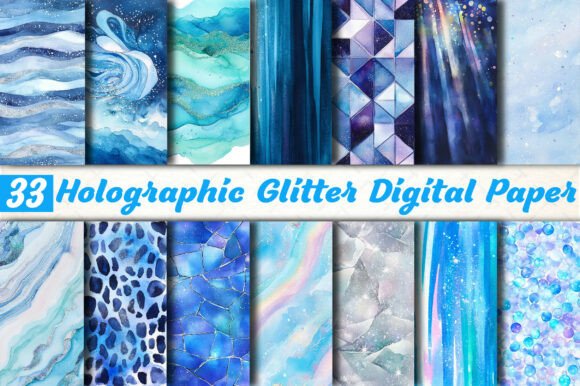
Blue holographic glitter digital paper represents a specific intersection in the digital asset market where high-impact visual texture meets practical usability. For designers, crafters, and print-on-demand sellers, selecting the right background or overlay is rarely just about color; it involves evaluating resolution, file format flexibility, and how well a texture translates from screen to physical substrate. This particular category of digital paper distinguishes itself through a combination of a distressed aesthetic, high-resolution transparency, and a versatile color profile that mimics the iridescence of physical holographic materials without the associated printing costs or material waste.
Understanding the technical specifications and creative applications of these assets is essential before integrating them into a workflow. With offerings typically including 33 unique designs at 300 DPI and dimensions of 12x12 inches (3600 x 3600 px), this resource targets users who require professional-grade textures for both digital display and physical production. However, like any specialized tool, blue holographic glitter digital paper has distinct strengths and limitations when compared to solid colors, standard glitter patterns, or physical media alternatives.
Distinguishing Characteristics: Distressed Texture vs. Clean Vector
When comparing digital papers, the primary decision factor is often the level of organic imperfection versus geometric precision. Blue holographic glitter digital paper in the distressed style offers a textured, worn appearance that differs significantly from clean vector gradients or seamless repeating patterns generated by software.
- Organic Realism: The distressed effect introduces noise, scratches, and uneven wear. This prevents the "plastic" look common in synthetic digital backgrounds, making the holographic sheen appear more tactile and authentic.
- Visual Depth: Unlike flat blue backgrounds, the holographic simulation relies on light and shadow within the texture itself. This creates perceived depth that can elevate simple typography or silhouette graphics without requiring complex layering effects.
- Transparency Utility: A critical differentiator for this specific asset type is the transparent background. Most digital papers are sold as opaque JPEGs. Having 33 PNG files with transparency allows users to apply the glitter texture as an overlay on existing designs rather than being forced to use it solely as a base layer.
For users seeking pristine, uniform surfaces for corporate branding or minimalist web design, this distressed holographic style may be too chaotic. However, for projects requiring character—such as vintage-inspired merchandise, grunge aesthetics, or handmade-style crafts—the imperfections are functional features rather than flaws.
Technical Suitability: Resolution and Format Considerations
The viability of any digital paper depends heavily on its technical specifications relative to the intended output. The 3600 x 3600 pixel dimension at 300 DPI is a standard benchmark for print quality, but its utility varies by application.
Print Production Capabilities
At 300 DPI, a 12x12 inch file is optimized for medium-format printing. This resolution is ideal for:
- Apparel and Textiles: T-shirt transfers, DTG printing, and sublimation on fabric bags. The resolution ensures the glitter detail remains crisp without pixelation when printed at actual size.
- Stationery and Cards: Framed artwork, greeting cards, and scrapbooking elements fit comfortably within the 12-inch constraint.
- Drinkware and Accessories: Tumblers, mugs, and phone cases generally require wrap areas smaller than 12x12 inches, making this resolution more than sufficient for full coverage.
However, users planning large-format prints such as posters, banners, or wall murals should recognize the limitations. Scaling a 3600px image beyond 12 inches will reduce the effective DPI below 300, potentially resulting in softness or visible pixel structure. In such cases, vector-based holographic patterns or ultra-high-resolution raster files (6000px+) would be superior alternatives.
The Advantage of PNG Over JPEG
Many digital paper bundles are delivered as flattened JPEGs to reduce file size. The provision of PNG files with transparent backgrounds shifts the utility of this product from a simple background to a compositing element. This distinction matters for:
- Layering Efficiency: Designers can place the glitter texture directly over colored bases, photographs, or illustrations without needing masking tools to remove a white background.
- Non-Destructive Editing: Transparency preserves the integrity of underlying layers, allowing for blend mode adjustments (Overlay, Soft Light, Screen) that integrate the holographic effect naturally.
- Cut File Compatibility: For users creating stickers or vinyl decals, transparent PNGs simplify the process of isolating specific glitter regions for cutting machines.
Comparative Analysis: Digital Assets vs. Physical Media
A common evaluation point for crafters and small business owners is whether to invest in digital holographic paper or purchase physical holographic cardstock and vinyl. Each approach carries distinct tradeoffs regarding cost, flexibility, and production speed.
Cost Efficiency and Scalability: Physical holographic materials are premium-priced due to manufacturing complexity. A single sheet of specialty cardstock can cost several dollars, and mistakes during cutting or printing result in material loss. Blue holographic glitter digital paper eliminates per-unit material costs. Once acquired, the asset can be used indefinitely across unlimited projects, making it economically superior for high-volume production or prototyping.
Color Consistency and Calibration: Physical holographic materials have inherent color variations between batches and manufacturers. Digital assets provide consistent color values across all uses. However, this introduces the challenge of monitor calibration. The iridescent nature of holographic blue is particularly sensitive to display settings. Users must understand that the vibrant cyan-blue seen on an OLED screen may print differently on matte paper versus glossy vinyl. Digital assets require color management discipline that physical pre-colored materials do not.
Tactile Experience: The most significant limitation of digital paper is the absence of physical texture. While the distressed effect simulates visual wear, it cannot replicate the light-catching properties of real holographic foil or the raised surface of glitter cardstock. For luxury packaging or high-end invitations where tactile feedback is part of the value proposition, physical media remains superior. Digital holographic paper is best positioned for products where visual impact matters more than touch, or where the final product will be viewed primarily on screens.
Application Fit: When to Choose This Resource
Determining whether blue holographic glitter digital paper is the correct solution requires matching the asset’s characteristics to project requirements. Based on comparative analysis, this resource demonstrates optimal fit in specific scenarios while presenting drawbacks in others.
Ideal Use Cases
- Merchandise Design: The 12x12 format aligns perfectly with standard print-on-demand product templates. The distressed aesthetic appeals to demographics favoring retro, Y2K, or alternative fashion styles.
- Digital Content Creation: Social media graphics, stream overlays, and digital planners benefit from the eye-catching holographic effect without the file size overhead of video or animated assets.
- Prototyping and Mockups: Testing holographic designs digitally before committing to expensive physical production runs reduces financial risk.
- Mixed Media Composites: The transparent PNG format excels in mixed-media digital art where holographic elements need to interact with painted or photographic layers.
Situations Requiring Alternatives
- Large Format Printing: As noted, 3600px limits maximum print size. Billboard or trade show graphics require higher resolution sources.
- Luxury Physical Products: Premium business cards or wedding suites demanding actual metallic sheen should use foil stamping or holographic substrates instead.
- Minimalist Corporate Identity: The distressed, high-energy aesthetic may conflict with conservative brand guidelines requiring clean, flat color systems.
- Editable Color Requirements: While hue/saturation adjustments are possible, rasterized glitter textures are less flexible than vector patterns for precise color matching across extensive brand systems.
Practical Implementation and Workflow Integration
Maximizing the value of blue holographic glitter digital paper involves understanding integration techniques that preserve quality. Because holographic effects rely on luminosity, improper handling can flatten the visual impact.
Blend Mode Selection: When using the transparent PNGs as overlays, standard "Normal" blend mode often produces muddy results. Experimenting with Linear Dodge (Add), Screen, or Overlay modes typically yields better luminosity retention. The distressed texture responds particularly well to Soft Light, which enhances contrast while maintaining the underlying design’s readability.
Color Management Awareness: Given the note about monitor calibration variance, prudent users should test-print samples before bulk production. Holographic blues occupy a challenging color space where RGB vibrancy often exceeds CMYK gamut. Creating custom ICC profiles for specific printer/paper combinations helps bridge this gap. Understanding that slight color variation is inherent to digital-to-physical translation prevents disappointment and ensures realistic client expectations.
File Organization: With 33 individual designs, systematic organization prevents workflow friction. Categorizing files by texture density, color temperature, or distress level enables faster selection during active design sessions. Maintaining original PNG masters while creating project-specific copies preserves asset integrity for future use.
Making an Informed Decision
Blue holographic glitter digital paper occupies a valuable niche for creators balancing visual impact with production efficiency. Its combination of distressed authenticity, transparent versatility, and print-ready resolution addresses common pain points in digital crafting and merchandise design. The 33-design bundle provides sufficient variety for sustained creative exploration without overwhelming storage or selection processes.
However, informed purchasing requires honest assessment of project parameters. Users prioritizing tactile luxury, large-format output, or editable vector precision should explore alternative solutions. Those working within the 12x12 inch sweet spot, valuing digital flexibility over physical texture, and appreciating the distressed holographic aesthetic will find this resource delivers practical utility alongside creative inspiration. The decision ultimately hinges on whether the specific technical and stylistic attributes align with your production requirements and artistic vision.
As with any digital asset, success depends not merely on acquisition but on thoughtful application. Understanding the interplay between resolution, transparency, color science, and end-use context transforms a simple download into a reliable component of professional creative workflows. Whether enhancing t-shirt designs, elevating handmade cards, or adding vibrancy to digital content, blue holographic glitter digital paper serves as one tool among many—valuable when appropriately matched to the task at hand.